

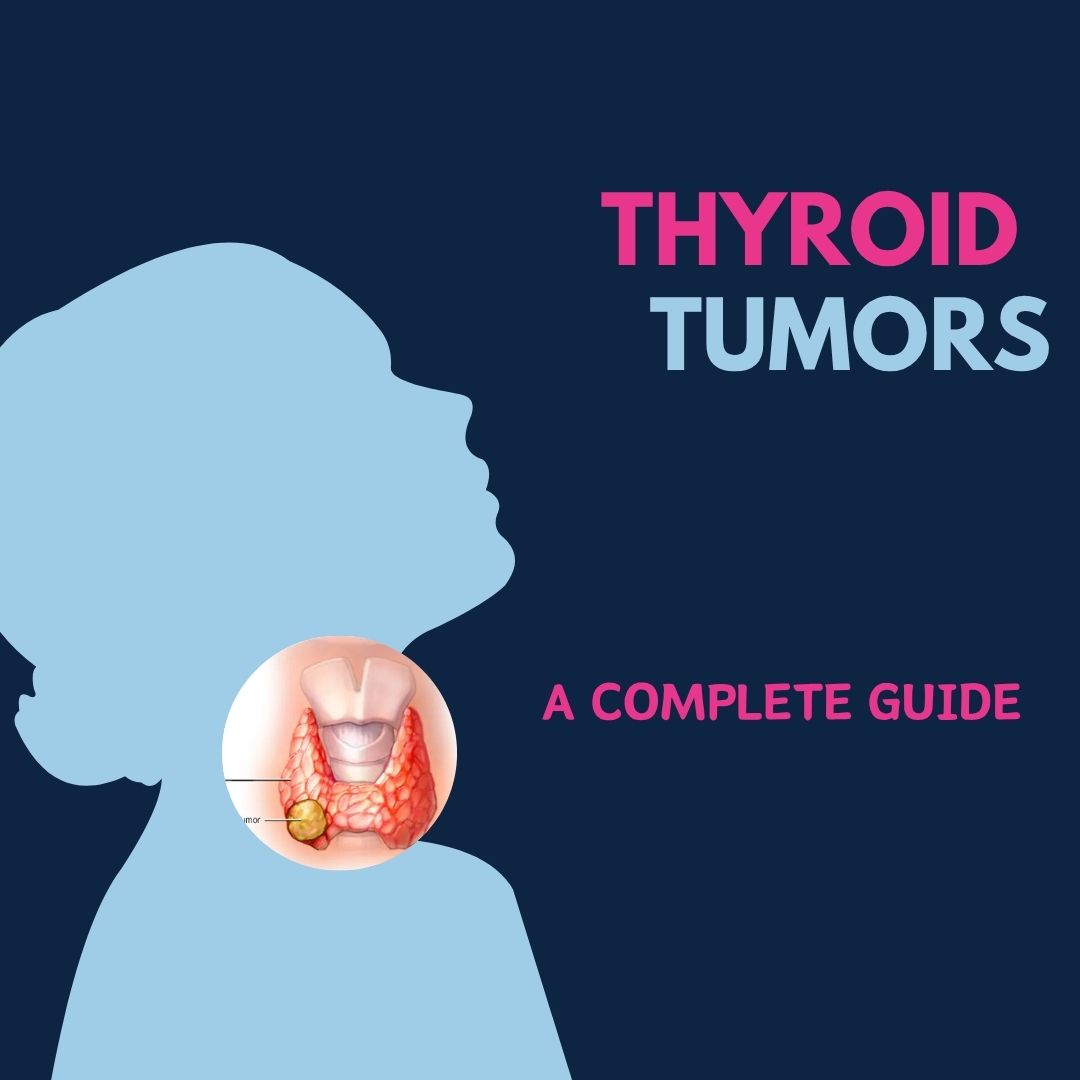
WHO classification of thyroid tumors,Thyroid tumor is a problem that grows especially in the thyroid gland located in the neck. Which starts growing slowly with time. Generally these tumors are benign or malignant. It is very important for us to understand thyroid tumors properly. Because if it is not identified at the right time and treated properly, then it creates very complex problems in the future.
WHO (World Health Organization) has contributed a lot in identifying and classifying thyroid tumors. Through the WHO Classification of Thyroid Tumors system developed by WHO, doctors and pathologists are helped to understand what are the types of tumors as well as how it should be treated.
Through this article today we will try to explain the various classes of thyroid tumors prepared by WHO in simple language, so that you can get better information about various types of diseases related to thyroid.
What is WHO Classification of Thyroid Tumors?
First of all, we will try to understand that WHO Classification of Thyroid Tumors is an important scientific system. Which has been specially prepared by the World Health Organization. Its main purpose is to classify the tumors occurring in the thyroid gland on the basis of their type, behavior and structure.
This helps the doctor to correctly identify the correct disease, plan its treatment and also assess and classify the possible consequences of the disease.
Main purpose of WHO classification
Generally, the main purpose of its classification is to ensure that an easy language and standards are used by doctors and pathologists around the world. This makes the treatment effective and qualitative. Along with this, it also helps in many ways in research around the world.
History of WHO classification
The classification of thyroid tumors was first published by WHO in 1974. Since then, this system has been updated from time to time. So that new scientific facts and various types of discoveries can also be included in it. Recently, the new version is WHO 2022 classification. In which some new types of tumors have been added. Also, the old name has been changed according to the modern approach.
Main types of thyroid tumors, based on WHO classification
According to the WHO classification of thyroid tumors, thyroid tumors are divided into three categories.
1.Benign tumors
The characteristic of benign tumors is that they usually do not become cancerous, and also do not spread to different parts of the body. But it is also important to identify it correctly. So that unnecessary treatments can be avoided for it.
- Follicular adenoma
We call it a common benign gland. Which is found in the thyroid. The cells in it form a lump. Which grows slowly with time, but does not spread.
- Oncocytic adenoma
It is also known as Hurthle cell adenoma in medical language. Also, there is a type of follicular adenoma. Which contains special types of cells.
2. Some malignant tumors
These tumors are also known as cancer. WHO has classified these malignant tumors into different types.
- Papillary thyroid (carcinoma-PTC)
This is a common type of thyroid cancer. Which grows with time and is easily treated.
- Follicular thyroid carcinoma- FTC)
This can be called a cancer which grows slowly.
- Medullary thyroid carcinoma-MTC)
Generally, this is thyroid cancer originating from C cells.
Generally, it can also be hereditary. Special types of tests and monitoring are also required for this problem.
- Anaplastic thyroid carcinoma -ATC)
This is a very serious and aggressive cancer. Which spreads rapidly. Generally, its treatment is difficult.
- Poorly differentiated thyroid carcinoma-PDTC)
Generally, this is a cancer of the stage between papillary and anaplastic carcinoma. It is neither slow nor very aggressive.
Different types of rare tumors
There are some different types of tumors. These have been given a special place in the WHO classification.
- Squamous cell carcinoma
This is also known as a special type of rare thyroid cancer. It develops from the cells of the skin or respiratory tract.
- Mucoepidermoid carcinoma
It is usually found in the salivary glands. But sometimes in rare cases it has been found in the thyroid as well.
- spindle epithelial tumor with thymus-like Differentiation- SETTLE
This problem is also commonly found in children and young adults. It has features like thymus gland. It is also a very rare tumor. In this way we see that the detailed classification shows why it is so important to identify the types of thyroid tumors.
WHO 2022 New Updates Regarding Classification of Thyroid Tumors
The classification system of thyroid tumors has been updated based on the new updates of WHO 2022. It also includes new discoveries and scientific society. Especially with this new version, many important changes have been seen in various criteria for identification, naming and classification of tumors. The main objective of all these changes is to promote more accurate diagnosis and effective treatment.
Main changes made on this (based on WHO 2022 report)
Here is a list of some of the main updates.
Changes
1. Changes in nomenclature: Some important changes like Hurthle cell tumour are now called oncocytic tumors to maintain international uniformity.
2. Addition of new tumour types: For example NIFTP is now clearly identified as a 10W-risk tumour.
3. Addition of grading systems: Some types of cancer called poorly differentiated thyroid carcinoma (PDTC) are now included in the grading system to better evaluate its aggressiveness.
4. Importance of molecular features: Gene mutations and molecular profiles are now also being included in the classification of tumours, such as BRAF and RAS mutations.
5. Some rare tumours like SETTLE: SETTLE and other rare types have been clearly classified to facilitate correct identification. Why are these changes important???
- This makes thyroid tumours easier to understand.
- It helps the doctor to make an accurate and detailed treatment plan.
- This provides uniformity in research and global medical data.
Special importance of WHO classification in its treatment
WHO Classification of Thyroid Tumors is very useful for doctors and pathologists to correctly identify thyroid tumors and plan appropriate treatment.
- Important role in pathology report:- WHO classification clearly shows the type of tumor. Due to which there is accuracy in making its report.
- Impact on treatment plan:- Based on this, natural surgery, radioactive, iodine or other treatment of the tumor is decided.
- Prognosis value:- Sathia classification helps in predicting how the patient’s disease will progress – such as whether the cancer will grow slowly or spread rapidly.
Conclusion
The WHO Classification of Thyroid Tumors is a reliable and scientific system for identification, treatment and prognosis of thyroid tumors. It helps the doctor to understand the nature of the tumor and plan a better treatment for it. Through this article, you have been told all the things related to thyroid. If you have any kind of problem, then you can get your doubts cleared by consulting any expert. Because the condition of every patient is different.
Frequently Asked Questions (FAQs)
Q. What are the main types of thyroid tumors?
Ans. There are mainly two types of thyroid tumors.
(1) Benign – such as follicular adenoma and
(2) Maligna – such as pupillary, follicular, medullary and anaplastic carcinoma.
Q. Is papillary carcinoma a serious problem?
Ans. Papillary thyroid carcinoma is usually the least serious cancer. Also, if detected early, it can be cured quickly.
Q. How does WHO classification help the doctor?
Ans. WHO classification helps the doctor to accurately identify the tumor, understand its severity and plan better treatment.
Send feedback
Read also: Laser treatment for gall bladder stone: procedure,benefits and riskshttps://imhoro.com/laser-treatment-for-gallbladder-stone-procedurebenefits-and-risks/
Facebook: Imhoro commmunityhttps://www.facebook.com/profile.php?id=61575370258519
Written by Suraj Horo

